
Publishing a children’s book is exciting. It’s also one of the most rewarding creative projects you can do!
However, the process of making a story into a book that is professionally published is much more than writing a manuscript. You will have to consider editing, illustrations, page layout, ISBN registering, printing, distributing, and how your readers will find your book once it is released.
So you’re thinking about writing a kid’s book and wondering how to publish a children’s book worldwide? You’re not the only one who’s thinking about publishing a children’s book worldwide! Thousands of global writers go on the same trip every year. Some pursue a traditional publishing deal, while others choose to self publish children’s book projects independently and keep full control of their work.
Both the paths are not suitable for all.
The right option for you will depend on your vision and the level of involvement you wish to maintain during the publishing process, as well as your budget.
This book takes you through how to publish a children’s book, from writing it to having it in the hands of the little ones. We’ll show you the process of professional publishing, what to avoid doing, and where to get professional help to make the process a lot easier.
How Do You Publish a Children’s Book worldwide?
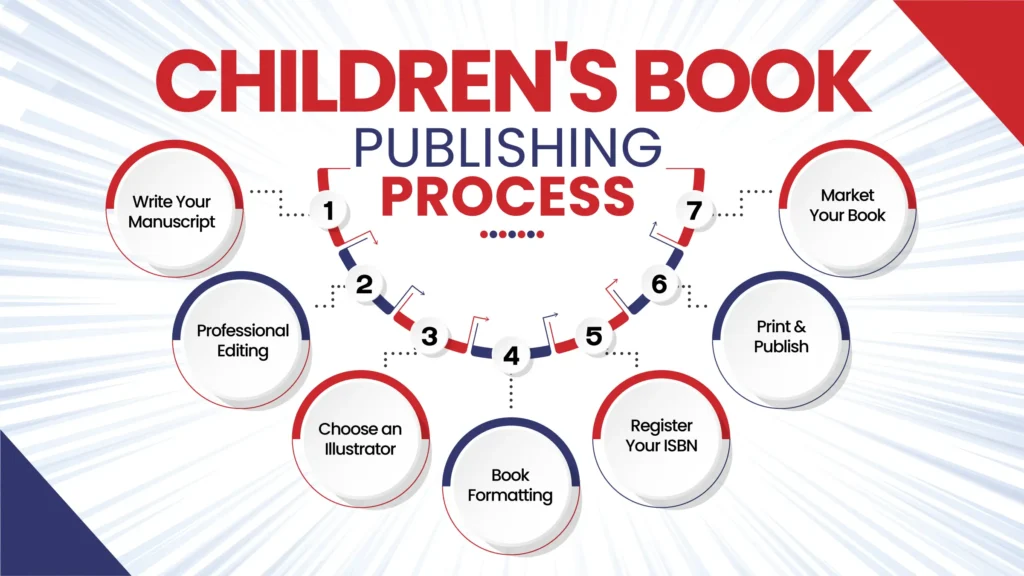
To publish a children’s book worldwide, start by writing and editing your manuscript, then work with an illustrator if your book requires artwork. Format the book for print and ebook, register an ISBN through the appropriate agency for your country, and choose whether to publish traditionally or independently using platforms such as Amazon KDP or IngramSpark. Once your book is published, you’ll also need to meet any legal deposit or archival requirements that apply in your jurisdiction.
Traditional Publishing vs Self-Publishing: Which Is Right for You?
This is typically the initial choice you will have to make as an author.
Should you submit a children’s book to a publisher or self publish children’s book projects yourself?
Either way can result in a successful children’s book. They are just totally different.
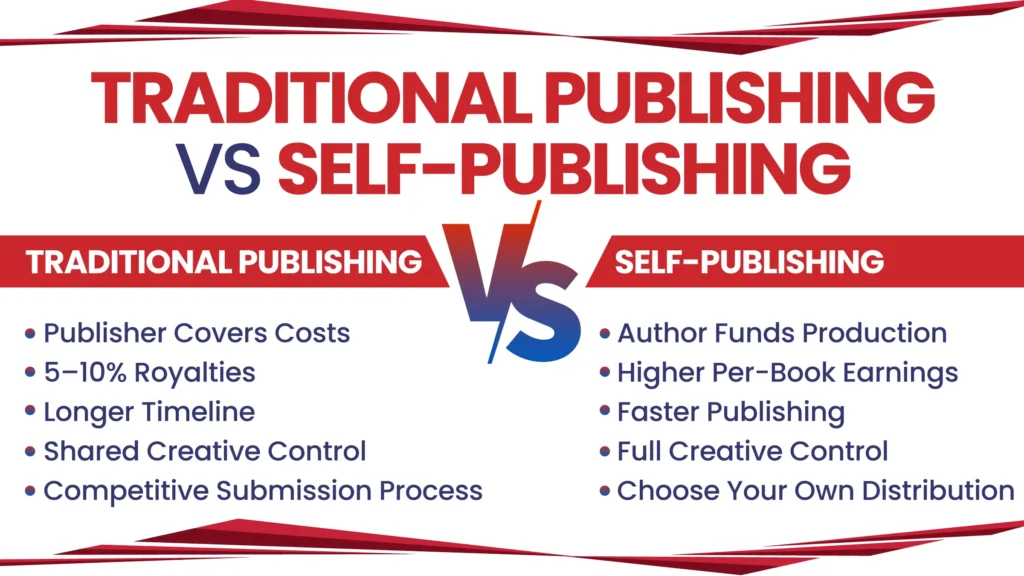
There are several reasons why traditional publishing is appealing to many first-time authors, and the primary reason is that the publisher has to deal with many of the costs involved with publishing. In general, the publisher pays for the editing, illustration, design, printing and distribution, while the author receives a small profit.
This means there is a high level of competition as well.
This can take many months to be accepted by a traditional publishing house. Submission windows for many publishers are only open for a certain period of the year. Some only accept a certain percentage of the manuscripts submitted and it will take months after submission to hear back. Often, unsuccessful submissions are not given individual feedback.
If you’re wondering how to find a children’s book publisher, start by researching global publishers that accept children’s manuscripts and carefully follow their submission guidelines.
The typical royalty is 5-10% of the retail price of the book, if it’s accepted. The profit per book is smaller, but you will also not have to pay thousands of dollars upfront for the production of the books.
Self-publishing works differently. You take all decisions yourself without having to wait for publisher’s approval before your manuscript is published. The illustrator is selected, the cover is approved, the price set, the book is sold where you want it sold and the book is released when you want it released.
A lot of authors like that freedom. Often publication can take place within weeks, not years. You retain significantly more of your profits from each sale but will pay for the editing, illustration, formatting and marketing.
If you’re researching how to self publish a children’s book, this level of control is often one of the biggest advantages. It also gives you the flexibility to self publish children’s book on Amazon KDP, IngramSpark or other distribution platforms.
There is another thing I would like to note as many of the publications guides have failed to note.
However, for people with a very limited budget, traditional publishing may be the more cost effective method. It typically involves relinquishing creative input and earnings and the burden of producing the book is borne by the publisher.
This is why it’s crucial to consider your long term goals instead of thinking that one path to publication is better than the other. Understanding the traditional vs self publishing children’s book debate will help you choose the path that aligns with your goals.
Let’s do a quick comparison.
| Feature | Traditional Publishing | Self-Publishing |
| Upfront cost | Usually paid by the publisher | Paid by the author |
| Royalties | Around 5–10% | Higher per-copy earnings |
| Creative control | Shared with the publisher | Complete control |
| Publishing timeline | Often 12–24 months | Weeks or months |
| ISBN | Usually owned by the publisher | Usually owned by the author |
| Marketing | Shared responsibility | Mostly author-led |
Many successful global children’s authors have built careers using both publishing models.
The right choice is the one that fits your goals, not someone else’s. Get a children’s book published worldwide in the way that best suits your budget, timeline and creative vision.
Which Path Is Right for You?
Traditional or self-published, the best choice depends on your goals, timeline and budget. Talk it through with a publishing expert, free of charge.
Compare My OptionsGetting the Basics Right: Word Count, Page Count and Age Groups
Many authors who are just starting out may be writing to the wrong audience.
A story that is great for a 9-year-old may not be great for a preschooler.
Determine who your book is written for before you begin writing it. This choice will affect the words you use, the length of sentences to the number of illustrations and total picture book page count.
The following table is a summary of the standard publishing conditions that are followed in the children’s publishing industry.
| Age Group | Typical Word Count | Typical Page Count |
| Board Books (0–3 years) | Minimal text, image-led | 12–24 pages |
| Picture Books (3–8 years) | 500–1,000 words | 32 pages |
| Early Readers (5–9 years) | Up to 2,500 words | 32–48 pages |
| Chapter Books (7–9 years) | 10,000–12,000 words | 60–100 pages |
These do not constitute hard-and-fast rules.
The number of words in some picture books is less than 500 and in others more than 1,000, if the story requires it. Remember, it’s about what is appropriate for your readers and not what is required in a specific word count.
For example, if you’re planning to write a children’s book and get it published, toddlers benefit from stories where illustrations carry much of the narrative. Young children are more interested than lengthy paragraphs in repetition, rhythm and simple language.
Older readers, however, can handle more complex plots and longer chapters, as well as more developed characters.
Once you know these expectations, it becomes easier to do the rest of the steps involved in creating an illustration, book formatting and printing.
It also helps your manuscript feel more professional whether your goal is to get a children’s book published worldwide, publish a kids book, or Publish a Picture Book for young global readers.
Once you have determined your audience, the next step is to write a manuscript that children, parents and publishers will love to read.
Writing a Manuscript That Actually Gets Noticed
All successful children’s books begin with a good idea, but ideas aren’t publishable.
The editors, the literary agents and young readers who remember are the ones who are struck by the way the story makes them feel.
If you’re learning how to publish a children’s book or planning to write a children’s book and get it published, spend more time refining your manuscript than rushing towards illustration or printing. A polished story will always outperform one that’s simply “good enough.”
Although children’s books may have less words than novels, each sentence is more significant. There’s not a lot of room for gratuitous chit-chat or extended narrative. Each page needs to advance the story.
There are four qualities of the strongest manuscripts.
- Clear storytelling
- Natural rhythm
- Emotional connection
- Memorable characters
If you are working on a picture book, read your book aloud.
Is it flowing in a natural manner?
Are the sentences interesting to listen to?
Children are not often read to by themselves. They will be read to by parents, grandparents and teachers and the language for this reason will have to be engaging every time.
Reiteration can also be one of your most powerful assets.
Consider books that kids want to hear again and again. Many have repetition of words or repetitive patterns, which can stimulate children’s participation.
This is not a coincidence.
It’s a result of careful editing.
Don’t Skip Professional Editing
Many first-time authors think that what they need is the feedback they can get from friends and family.
They can’t. Those who are familiar with you are generally wanting to support you. Professional editors look at your manuscript differently. They’re concerned with pacing, structure, readability and if your story really appeals to your target audience or not.
For anyone who’s really into writing, as well as the global Society of Authors (ASA), which offers great advice on publishing contracts, copyright, royalties and professional development, there are other organisations that can help as well. Many new authors become members of ASA to learn more about the publishing world before submitting.
A manuscript assessment will tell you more about issues before they are costly errors at illustration or formatting stage.
For instance, an editor may consider:
- We have some repetitive scenes that don’t necessarily feel interesting.
- Dialogue that is too sophisticated for audience age group
- Pages in which illustrations are used to tell a story in lieu of additional text.
- Endings that don’t deliver enough emotional impact
Preventing these problems before artwork is started will save time and money.
If you’re planning to submit a children’s book to a publisher, professional editing also helps your manuscript meet industry expectations.
Even authors choosing to self publish children’s book projects benefit from the same process because readers expect the same quality regardless of how a book is published.
Need help refining your story? Prior to jumping into design and illustration, it is beneficial to have your picture book manuscript professionally edited by a children’s book writer. A good manuscript will make the rest of the process much easier.
Is Your Manuscript Ready?
Before you invest in illustration, make sure your story is as strong as it can be. Get a professional manuscript assessment from a children’s book editor.
Get My Manuscript ReviewedFinding and Working with an Illustrator
If you’re planning to get a children’s book illustrated and published, choosing the right illustrator is one of the biggest decisions you’ll make.
Great illustrations do more than just fill in the story.
They expand it.
The strongest art evokes feelings, brings joy and provides a missing clue that is on purpose.
For those who are new to writing, the first place to look is social media; but for those who are looking for experts, there are better places to look.
The following are some of the safest options for hiring a children’s book illustrator worldwide:
- Illustrators global markets directory
- SCBWI global markets
- independent author and illustrator Facebook communities
- Professional illustration portfolios and personal websites
- Recommendations from editors and publishers
Before hiring a creative professional, it’s also important to understand the terms of publishing contracts and copyright and illustrator agreements, and this is where the global Society of Authors (ASA) can assist.
Don’t settle for the first illustrator that you like, just because they are faster.
One of the savviest strategies is to make a short list and ask a few paid test illustrators to create a small sample set before deciding to go ahead with a big project.
This allows you to make a comparison:
- Communication and professionalism
- Ability to interpret your story
- Character consistency
- Attention to feedback
- Overall illustration style
Another tip that many authors don’t keep in mind.
Write from a kid’s perspective; have kids help you choose.
Illustrations may be effective for both adults and children, but children may require different styles than adults. If you know a few sample illustrations that have been shown to your target age group, you can get very valuable feedback before you commit to an illustrator.
Find the Right Illustrator, First Time
We match authors with global illustrators whose style fits their story ]so you skip the trial-and-error search.
Find My IllustratorUnderstand Copyright Before You Begin
This is the false assumption made by many authors, that paying for illustrations equates to ownership of the artwork.
This will not always be so.
In global markets, the copyright of the artwork is normally owned by the illustrator as its creator. They may, however, specify or license particular usage privileges to the author after the payment.
Be sure that your contract makes it explicit before you begin any work that you envision that it will be:
The owner of the painting.
- It can be used anywhere.
- Whether it is possible to use for marketing materials
- Whether it can be featured on merchandise or upcoming editions
- It’s important to get this in writing to protect both you and the illustrator.
How Much Do Children’s Book Illustrations Cost?
Illustration costs vary depending on experience, complexity and the number of pages.
As a general guide:
| Illustration Service | Typical global Cost |
| Character concept | $150–$500 |
| Single illustrated page | $150–$400 |
| Double-page spread | $300–$800 |
| Complete 32-page picture book | $4,000–$12,000+ |
It’s easy to go for the cheapest quote, but one of the most important considerations is the illustration’s quality when deciding whether a parent will pick up your book.
Quality artwork is usually a worthwhile investment.
If you’re looking to work with global children’s book illustrators, choosing professionals with experience in children’s publishing can make the entire process smoother and produce a far stronger final book
Formatting: Bringing Text and Illustrations Together
If you have finished your manuscript and illustrations, then it’s time to assemble everything.
This part is known as book formatting and a lot more significant than a lot of first-time authors realize.
Children’s books do not have a novel format.
Each page must include text, pictures and space and be well proportioned so that reading is not over cluttered.
That is why a storyboard is typically done by publishers with experience before the artwork is finalized and put into the book.
A storyboard can assist you in making decisions:
- Where each illustration will appear
- How page turns build suspense
- Which pages contain text
- Which spreads rely entirely on illustrations
This can be done before final layouts to minimize costly revisions later on.
Typography also matters.
Young readers require fonts that are easily identifiable and easy to read.
As a general guide:
| Reader Age | Recommended Font Size |
| Preschool and early readers | 16–24 pt |
| Older children’s books | 12–16 pt |
| Adult fiction | 11–12 pt |
Remember spacing!
The illustrations should never be taken away by text. Maintain adequate spacing to make each page welcoming, not crowded!
When creating files for professional printing, you will also need to consider bleed, trim lines and safe margins. These technical details ensure that there will not be any important text or artwork that will be cut off in the printing process.
At this point, many authors decide to seek professional assistance as formatting issues can cause delays in printing or compromise the print quality of the book.
If you would prefer to avoid such problems, you can hire professional book formatting services to format a print-ready copy that will fulfill the needs of IngramSpark and also Amazon KDP.
Getting Your ISBN Right
One of the easiest details to overlook when learning how to publish a children’s book worldwide is the ISBN.
While it may be just a number, it’s what sets your book apart in the publishing world. If not, bookstores, libraries and online retailers cannot catalogue and sell your book.
ISBN registration is managed by national and regional agencies. Check the International ISBN Agency directory to find the correct provider for your country.
If you’re planning to publish a children’s book worldwide, you’ll usually need more than one ISBN.
It’s because all the versions of your book are considered to be a distinct product.
For example:
| Book Format | ISBN Required? |
| Paperback | Yes |
| Hardcover | Yes |
| Ebook | Yes |
| Audiobook | Yes |
If you’re releasing both a paperback and an ebook, you’ll need two separate children’s book ISBN registrations.
While there are some platforms that provide ISBN for free, there are benefits to buying an ISBN.
Owners of the ISBN:
- You’re listed as the publisher.
- If you decide to change your printer later, you’ll have more options.
- Your publishing company looks more professional.
- You have full ownership of your book’s publishing details.
Unless you intend to create a library over time, it is best to purchase your own ISBNs.
When you create your book files, generate your barcode and upload your book to a distribution platform like IngramSpark or Amazon KDP, you’ll use your ISBN.
For those who are not sure what to do, they can also help you register your ISBN with your professional publishing services, format your books and distribute them to the world, making it easier for those who are first-time authors.
Your children’s book ISBN is not just a bar code. It is the identity of your book, so sign it up properly from the beginning.
Your Legal Obligation: Legal Deposit Requirements
Once you have your book published, the work is not over.
Legal deposit rules vary by country. Some jurisdictions require publishers or authors to provide copies of a published book to a national or regional library.
Many first-time authors are surprised that this is applicable to self-publishing books, as well as traditionally published books.
If you self publish children’s book projects, you’re still responsible for meeting these requirements.
Once published, you will most likely need to send copies of your book to:
- The national library in your jurisdiction
- Your relevant State library legal deposit authority
This may differ slightly from state to territory, but the intent is always the same.
Legal deposit is a vital component of a national heritage of the publishing history of global markets for the benefit of future generations. It guarantees that books published today will be available for the researcher, educator and reader of tomorrow.
This isn’t optional.
Whether legal deposit applies depends on where your book is published and distributed, so check the current rules in your jurisdiction.
Luckily, it’s simple.
Libraries, in most cases, now accept books and other publications in electronic form directly, and in some cases, they may require printed books to be sent by mail, depending on the state.
Check the current guidance from your national ISBN agency, library and publishing authority before release so your book meets local requirements.
For many publishing companies, legal deposit support is part of the package they offer authors to help them avoid the process themselves.
Where required, completing legal deposit is one of the final steps in publishing a children’s book. It helps preserve the literary record in your jurisdiction.
Never Miss a Compliance Step
ISBN registration, metadata and legal deposit can trip up first-time authors. We handle it all, so nothing gets delayed or rejected.
Let Us Handle the AdminChoosing How to Print: POD, Offset, and the Amazon Quirk
Once your manuscript, illustrations and formatting are complete, it’s time to decide how your book will be printed.
This decision affects your budget, distribution, inventory and even how quickly readers can buy your book.
For most authors learning how to publish a children’s book worldwide, there are two main options: print-on-demand (POD) or offset printing.
Print-on-Demand (POD)
Print-on-demand means your book is printed only after someone places an order. You don’t need to buy hundreds of copies upfront or find space to store boxes of books.
The two biggest POD platforms are:
- Amazon KDP
- IngramSpark
POD is ideal if you’re publishing your first book because:
- There’s very little upfront financial risk.
- Books can be ordered worldwide.
- You don’t need to manage inventory.
- Revisions are easier if you update your book later.
Many first-time authors who self-publish children’s books on Amazon KDP start with POD before investing in larger print runs.
Offset Printing
Offset printing works differently.
Instead of printing one copy at a time, you print hundreds or even thousands in one batch.
The initial investment is much higher, but the cost per book drops significantly.
Offset printing is often the better option if you:
- Visit schools regularly
- Sell at markets and festivals
- Supply bookstores
- Expect high sales volumes
The trade-off is storage. You’ll need somewhere to keep your books until they’re sold.
The Amazon Difference
One important detail many international publishing guides miss is how books reach global readers.
If you want your paperback to appear reliably on Amazon marketplace picture books, IngramSpark is generally the most practical distribution option for authors worldwide. It also distributes to many global bookstores, libraries and international retailers.
Many experienced authors use both platforms together:
- Amazon KDP for Amazon sales
- IngramSpark for wider bookstore and wholesale distribution
This combination gives your book the broadest possible reach without locking you into one retailer.
If you’re unsure which option suits your goals, our local print-on-demand for picture books helps authors compare print quality, costs and distribution before making a decision.
What It Actually Costs: An Honest Cost Breakdown
One of the biggest questions new authors ask is about the cost to publish a children’s book.
The honest answer?
It depends on how much you do yourself and how much professional help you need.
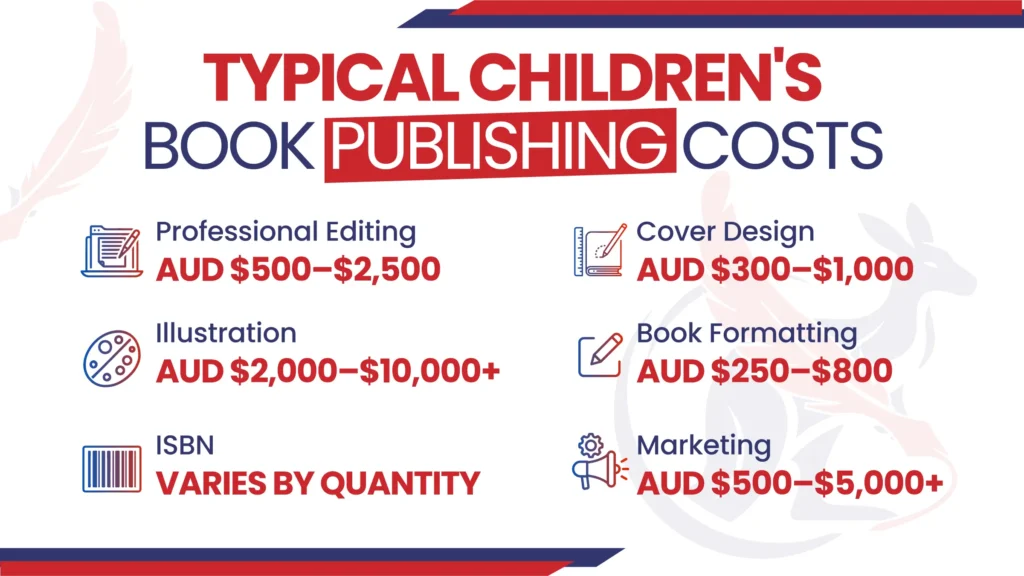
Below are realistic global cost ranges.
| Publishing Stage | Typical Cost (USD) |
| Professional editing | $500–$2,500 |
| Illustration | $2,000–$10,000+ |
| Cover design | $300–$1,000 |
| Book formatting | $250–$800 |
| Children’s book ISBN | Depends on quantity purchased |
| Proof copies | $50–$200 |
| Marketing | $500–$5,000+ |
Illustration is usually the largest investment for picture books.
Highly experienced global children’s book illustrators often charge more because they understand pacing, page turns, storytelling and children’s visual literacy, not simply drawing attractive artwork.
Understanding Your Break-Even Point
Many authors focus only on production costs.
A better question is:
“How many books do I need to sell before I recover my investment?”
For example:
If publishing costs total $6,000 and your profit per book is $12, you’ll need to sell around 500 copies before breaking even.
That might sound like a lot.
But it also helps you plan realistic marketing goals instead of expecting instant profits.
The truth is that many children’s books become successful gradually through:
- School visits
- Word of mouth
- Library events
- Repeat purchases
- Book Week promotions
For many authors, the first book isn’t primarily about making money.
It’s about building credibility, growing an audience and creating opportunities for future books.
If you’d like help estimating your own publishing budget, our team can prepare a personalised quote before you begin.
Know Your Numbers Before You Start
Publishing costs vary widely. Get a personalised, itemised estimate so there are no surprises along the way.
Get My Cost EstimateA Tax Tip Most Guides Miss
Here’s something many professional publishing guides overlook.
If you’re serious about becoming an author, the books you purchase for research in your own genre may be claimable as a business expense.
For example, if you’re studying successful picture books to improve your own writing, those purchases could potentially be tax deductible.
The same may apply to:
- Writing courses
- Industry memberships
- Professional editing
- Some publishing-related expenses
Every situation is different, so it’s worth checking with your accountant before making any claims.
It’s a small detail, but understanding the business side of publishing can save money over time.
Good publishing isn’t just creative, it also means understanding the practical side of running your author business.
Marketing: It Starts Before the Book Is Even Finished
Many first-time authors believe marketing begins after the book is printed. In reality, the most successful launches start months earlier.
While your illustrator is still working, you can begin building excitement around your project.
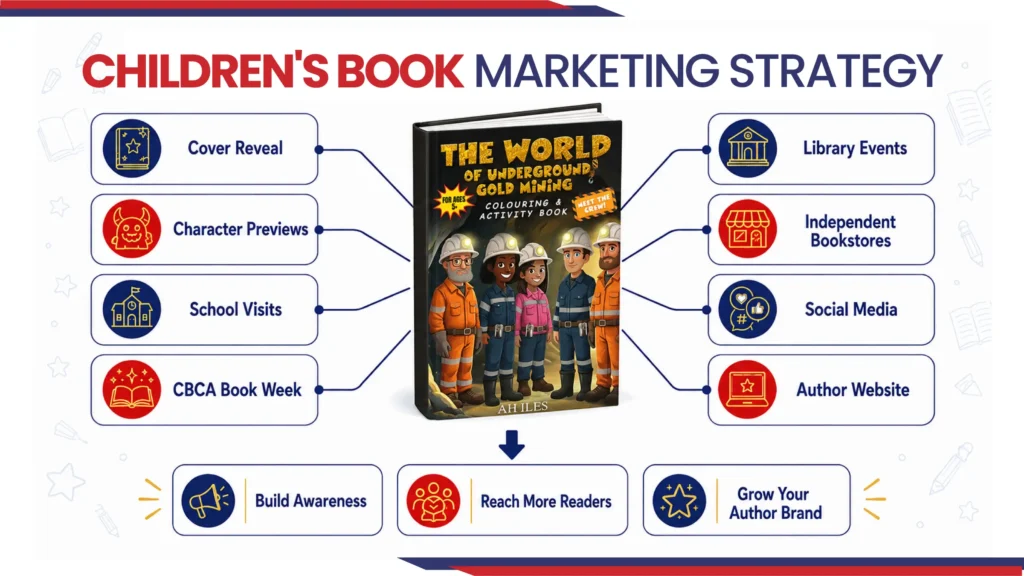
Some simple ideas include:
- Sharing cover sketches
- Revealing character artwork
- Posting behind-the-scenes updates
- Asking readers to vote between cover concepts
- Growing your email list
These small updates help readers become emotionally invested in your book before it’s available.
Marketing experts often talk about the “rule of five exposures.” Most people need to see a product several times before deciding to buy it. If readers first discover your book on launch day, you’re already behind.
Great Places to Promote Children’s Books Worldwide
authors worldwide have several excellent opportunities to connect with readers:
- CBCA Book Week
- Local markets
- School author visits
- Library storytelling sessions
- Independent bookstores
- Community festivals
Schools are more likely to consider global curriculum-aligned books that support classroom learning, making school visits and educator outreach valuable marketing opportunities.
These events help build relationships that often lead to repeat invitations and future book sales.
Launching a book is only the beginning. Consistent visibility is what creates long-term success.
If marketing feels overwhelming, our marketing support for children’s book launches service helps authors develop practical promotion strategies before and after publication.
So, start building your audience while your book is still being created, not after it’s finished.
A Great Book Still Needs to Be Found
Writing it was half the job. Let’s build a launch plan that gets your book in front of global readers, schools and libraries.
Plan My Book LaunchBeyond the Book: Websites and Audiobooks
Publishing your book is only one part of building your author career. The next step is helping readers discover everything else you create.
An author website gives you one central place to:
- Sell signed copies
- Collect email subscribers
- Share upcoming events
- Showcase reviews
- Announce future releases
Many successful authors eventually build an author website for their children’s books because it gives them complete control over their audience instead of relying entirely on social media.
You might also consider producing an audiobook.
Although picture books rely heavily on illustrations, narrated editions are becoming increasingly popular with families, schools and libraries.
Audiobooks can:
- Improve accessibility
- Reach busy parents
- Expand international sales
- Create another income stream
Publishing one book often opens the door to many other opportunities.
Think beyond a single title. Build an author platform that supports every book you publish in the future.
DIY Vs. Professional Help: Where Authors Actually Get Stuck
Many authors begin their publishing journey planning to do everything themselves.
And that’s completely possible.
Today, there are plenty of tools that make it easier than ever to write, format and publish a kids book independently.
However, after working through the process, most first-time authors discover that a few stages are much more challenging than they expected.
Knowing where these sticking points are can save you time, money and frustration.
Finding the Right Illustrator
One of the biggest hurdles is choosing the right illustrator. It’s not simply about finding someone who can draw well. Children’s book illustration is a specialist skill.
A great illustrator understands:
- Storytelling through images
- Character consistency
- Emotional expressions
- Page turns
- Visual pacing
- Print-ready artwork
If you’re trying to find a children’s book illustrator worldwide, don’t rush the decision.
Review portfolios carefully, commission a small paid sample if your budget allows and make sure expectations around timelines, revisions and usage rights are agreed upon before work begins.
Many authors who want to get a children’s book illustrated and published discover that spending a little more on an experienced illustrator produces a much stronger final book.
If you need help, you can work with global children’s book illustrators through our publishing team. We carefully match authors with illustrators whose style suits the story rather than offering a one-size-fits-all approach.
Book Formatting
Formatting looks easy until you actually begin. Unlike novels, picture books require text and artwork to work together across every spread.
Small adjustments can affect:
- Readability
- Illustration placement
- Bleed and trim areas
- Font consistency
- Print quality
Professional formatting ensures your book looks polished whether it’s printed through IngramSpark, Amazon KDP or an offset printer.
If you’ve already written your story, we can help get your picture book manuscript polished and professionally formatted before publication.
ISBN Registration and Legal Deposit
professional publishing also involves a few administrative steps that many first-time authors haven’t encountered before.
These include:
- Purchasing a children’s book ISBN
- Uploading files correctly
- Completing metadata
- Meeting legal deposit requirements
- Preparing print-ready PDFs
None of these tasks are particularly difficult. They’re simply unfamiliar.
Having someone guide you through them helps avoid costly mistakes that can delay publication.
Marketing
Writing the book is only half the job. Finding readers is often much harder.
Many excellent books struggle simply because very few people know they exist.
Building a launch plan, contacting reviewers, organising school visits and creating an author website all take time.
That’s why many authors seek professional support after publication rather than before it.
When DIY Makes Sense
Publishing independently is a great option if you:
- Enjoy learning new skills
- Have time to manage multiple stages
- Want complete creative control
- Are comfortable coordinating freelancers
When Professional Help Saves Time
Working with a publishing team is often worthwhile if you:
- Are publishing your first book
- Have a deadline
- Want industry-standard production quality
- Feel overwhelmed by the technical side
- Prefer one team managing the entire project
Many authors also begin with only an idea.
If that’s you, we can work with a ghostwriter to shape your story idea, develop your manuscript and guide you through the entire publishing process from concept to finished book.
If you’d rather avoid juggling multiple freelancers, our full-service publishing for first-time authors combines editing, illustration, formatting, printing and publishing support under one roof.
Thus, doing everything yourself is possible. Knowing when to ask for expert help can make the publishing experience far smoother and often produces a better book.
Ready to Publish Your Children’s Book?
Learning how to publish a children’s book worldwide can feel overwhelming at first, but that’s where everyone begins, with an idea and a story to tell.
If you opt for traditional publishing or self-publish a book, it is important to understand the process to make informed decisions along the way.
Whether you’re writing your manuscript, finding the right illustrator, or registering your ISBN, printing your book and organizing your book launch each have a part to play in the creation of a book that young readers will enjoy for years to come.
Once you have written your book, we can assist you to edit, illustrate, format, print and publish your book on Amazon with confidence.
And if you’re still at the idea stage, our team can help you write a children’s book and get it published through expert ghostwriting, illustration and end-to-end publishing support.
Our publishing experts can help you through the process from manuscript development to publication, if you prefer to go the extra mile and avoid the research.
From the initial idea to the finished product, we’re here to help you create your story into a beautifully published children’s book for readers all around the world and the world.
Ready to Stop Doing This Alone?
From manuscript to marketing, our team manages the entire publishing journey so your book gets the quality it deserves without the overwhelm.
Start My Full-Service Publishing Journey